




Advantages and disadvantages of district heating
District heating networks play an increasingly important role in the Dutch heat and energytransition. They offer a collective way to heat homes and buildings without natural gas. What advantages and disadvantages does the transition to a heat network offer?
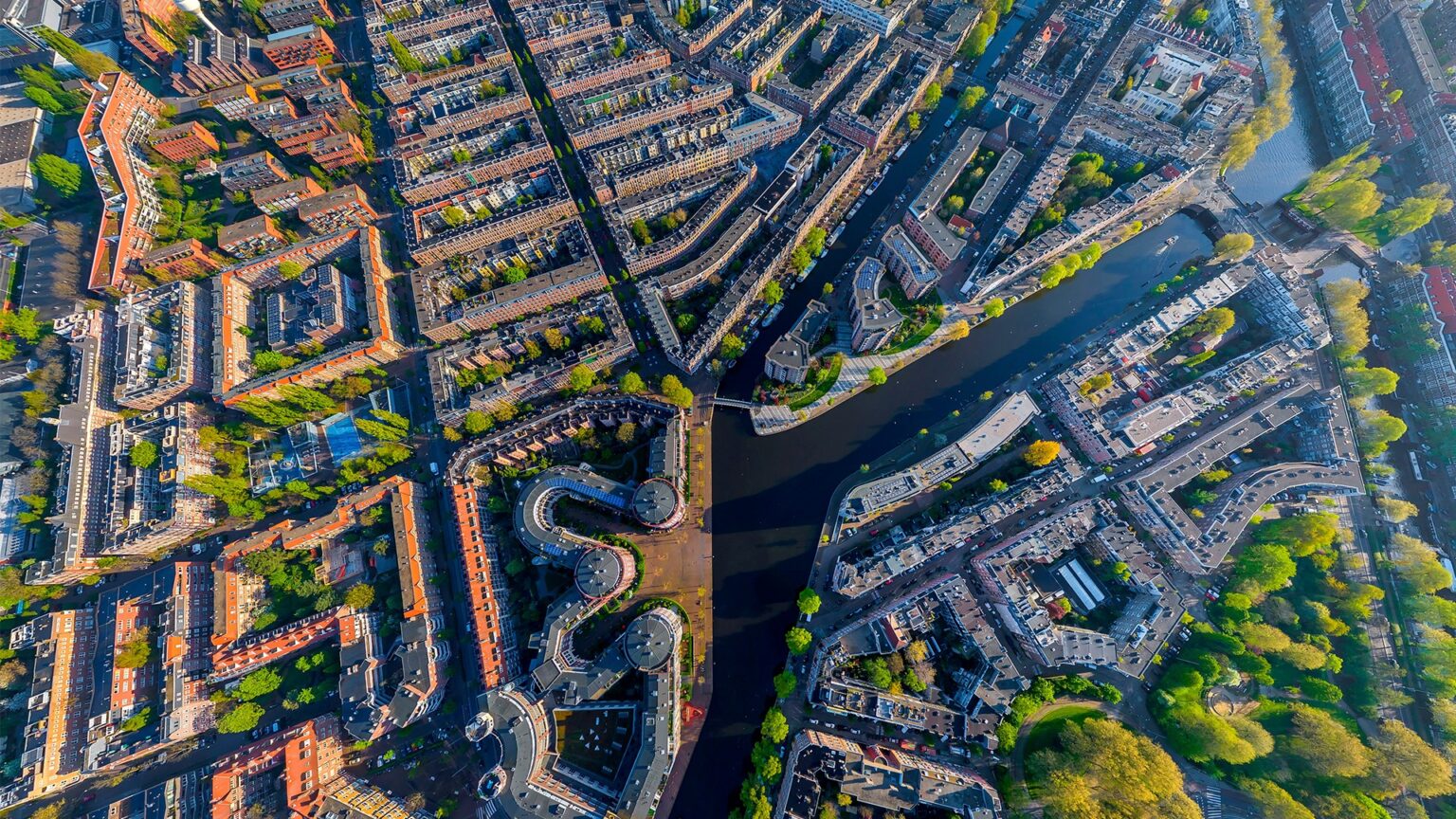
The heat used for district heating networks can come from different sources, such as residual heat from industry, geothermal energy, waste incineration or, increasingly, other sustainable sources. Instead of an individual central heating boiler, a building receives heat through a connection to the heat network. In the home, a delivery set makes the heat available for heating and domestic hot water. District heating is particularly suitable in densely built-up areas, where collective solutions are more efficient than individual installations.

Use the form below to contact Marijn Renting, Manager Business Development Heat (NDW).
"*" indicates required fields
District Heating in the Netherlands
What are the advantages of a heat network?
The advantages of a heat network are technical, economic and societal. The main advantages are listed below.
- Lower CO2 emissions and greater sustainability: An important advantage of district heating is that it helps reduce CO2 emissions. By using residual heat or sustainable sources, the use of natural gas in a neighbourhood is significantly reduced. This makes district heating an important instrument for achieving national climate targets.
- Reliable and comfortable heat supply: District heating supplies heat continuously. Users do not need to manage or maintain a central heating boiler, which provides comfort and fewer technical concerns. Heat output is stable and, in high-temperature networks, comparable to traditional heating. Low- or very-low-temperature networks can also provide additional comfort in summer by adding a cooling option. District heating also contributes to energy security in the Netherlands.
- Suitable for large-scale sustainability: For municipalities and property owners, district heating offers economies of scale. Through collective investments, entire neighbourhoods or business parks can be made natural gas-free in one go, accelerating the heat transition.
- Lower societal costs: District heating networks in densely populated urban areas are often more cost-effective for society as a whole than switching to individual heat pumps. This is because large-scale deployment of heat pumps can place additional strain on the electricity grid, potentially leading to grid congestion. The investments required to reinforce the Dutch electricity grid to support widespread heat pump adoption would run into several billions of euros more than the costs of connecting a large share of existing homes to district heating networks.
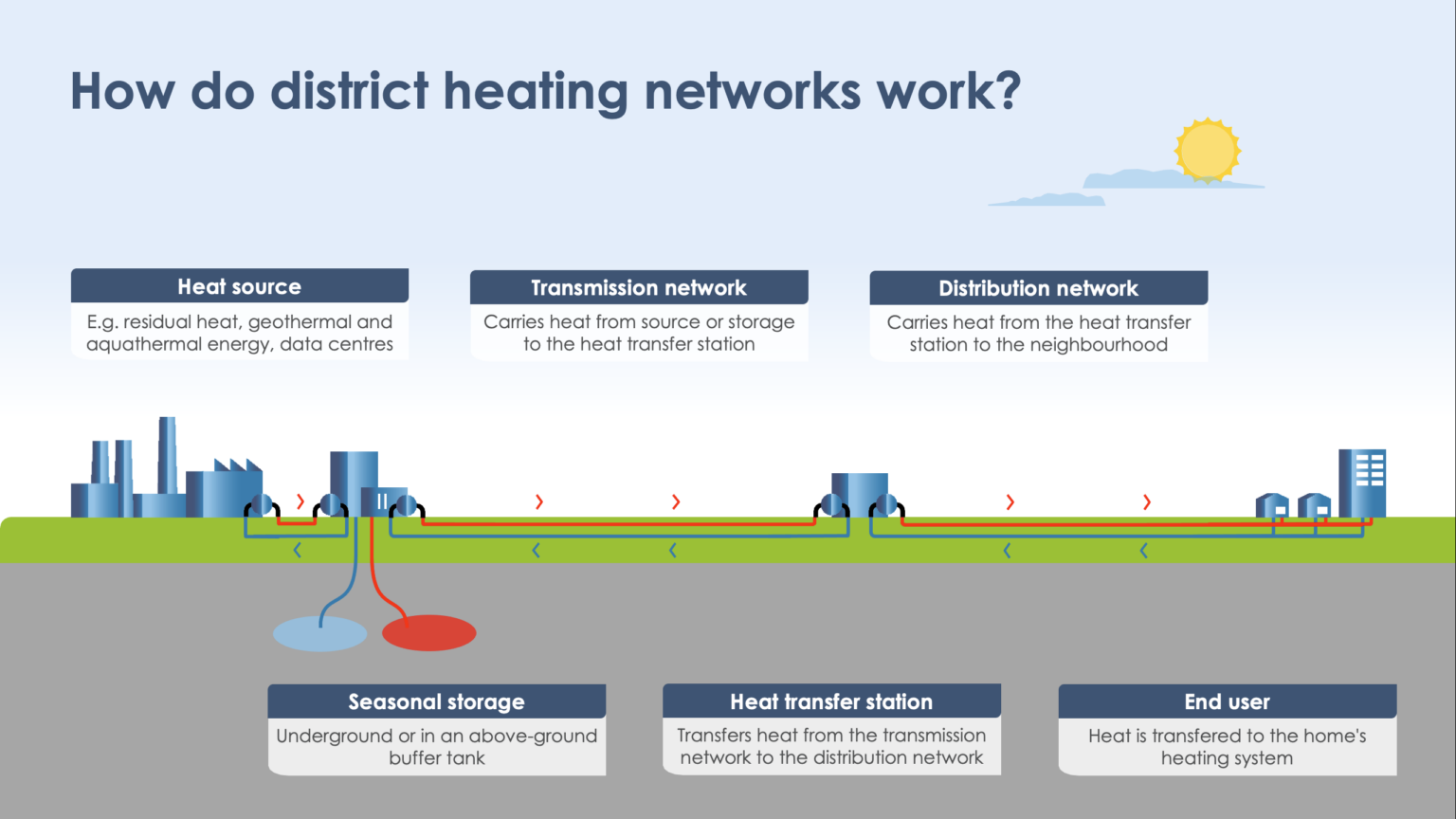 How district heating networks deliver sustainable heat from local sources to homes and buildings.
What are the disadvantages of district heating?
There are several disadvantages of district heating networks that should be taken into account when deciding how to move a neighbourhood or district away from natural gas.
- Limited choice of heat supplier: Because of the collective nature of a district heating network, end users cannot choose between different heat suppliers. This is one of the reasons why the Dutch Collective Heat Act (Wet collectieve warmte) places a strong emphasis on public ownership and transparency regarding costs and tariffs. Homeowners always remain free to choose an alternative sustainable heating solution, such as a heat pump.
- Complex business case: Developing district heating networks requires substantial long-term investments in infrastructure. Heat sources must also be available over many years to ensure a reliable supply. As a result, the business case is complex and depends on sufficient customer connections and long-term cooperation between public partners. Although the overall societal costs are often lower than those of all-electric solutions such as heat pumps, affordability for end users remains an important consideration.
- Dependence on heat sources: The sustainability of a district heating network depends on the heat sources it uses. If a heat source is not yet fully sustainable, the climate benefits compared with a conventional gas boiler may be more limited. It is also important that the selected heat source or mix of heat sources remains available for several decades. Geothermal energy is an example of a long-term sustainable heat source. Aquathermal energy, for example from wastewater treatment plants, can also play a role.
- Temporary disruption during construction: Installing district heating infrastructure in existing neighbourhoods and buildings can cause temporary inconvenience, including roadworks, traffic measures and disruption within homes and businesses. Effective planning and communication are therefore essential. On the other hand, in existing buildings a district heating connection unit is often easier to install than a heat pump combined with a hot water storage tank. In addition, district heating usually allows existing radiators to remain in place. If large numbers of households in a neighbourhood switch to heat pumps, this can contribute to electricity grid congestion, which may also lead to disruption.
NDW (EBN) and District Heating
To accelerate the rollout of district heating networks in the Netherlands, the National Heat Investor (Nationale Deelneming Warmte, NDW) was established. Guided by the public interests of affordability, feasibility and sustainability, NDW acts as a public shareholder on behalf of the Dutch State in establishing public heat companies. As a newly created public policy participation, NDW is currently part of Energie Beheer Nederland (EBN). NDW is also the vehicle through which the Dutch government would like to procure the currently privately held district heating activities of Eneco, Ennatuurlijk and Vattenfall.