




Geothermal Energy Research Drilling Programme
To assess whether the subsurface in a specific area is suitable for geothermal energy production, research drilling may be required alongside seismic surveys.
Based on the results of seismic surveys, research data well may sometimes be drilled. Together, these two types of investigations provide a more detailed understanding of the subsurface. This knowledge helps improve assessments of the potential for geothermal energy and increases the likelihood of successful geothermal energy projects. Energy Beheer Nederland (EBN) carries out both seismic surveys and research drilling as part of the SCAN Geothermal Energy programme.

Use the form below to contact Gitta Zaalberg, Manager Operations Geothermal Energy.
"*" indicates required fields
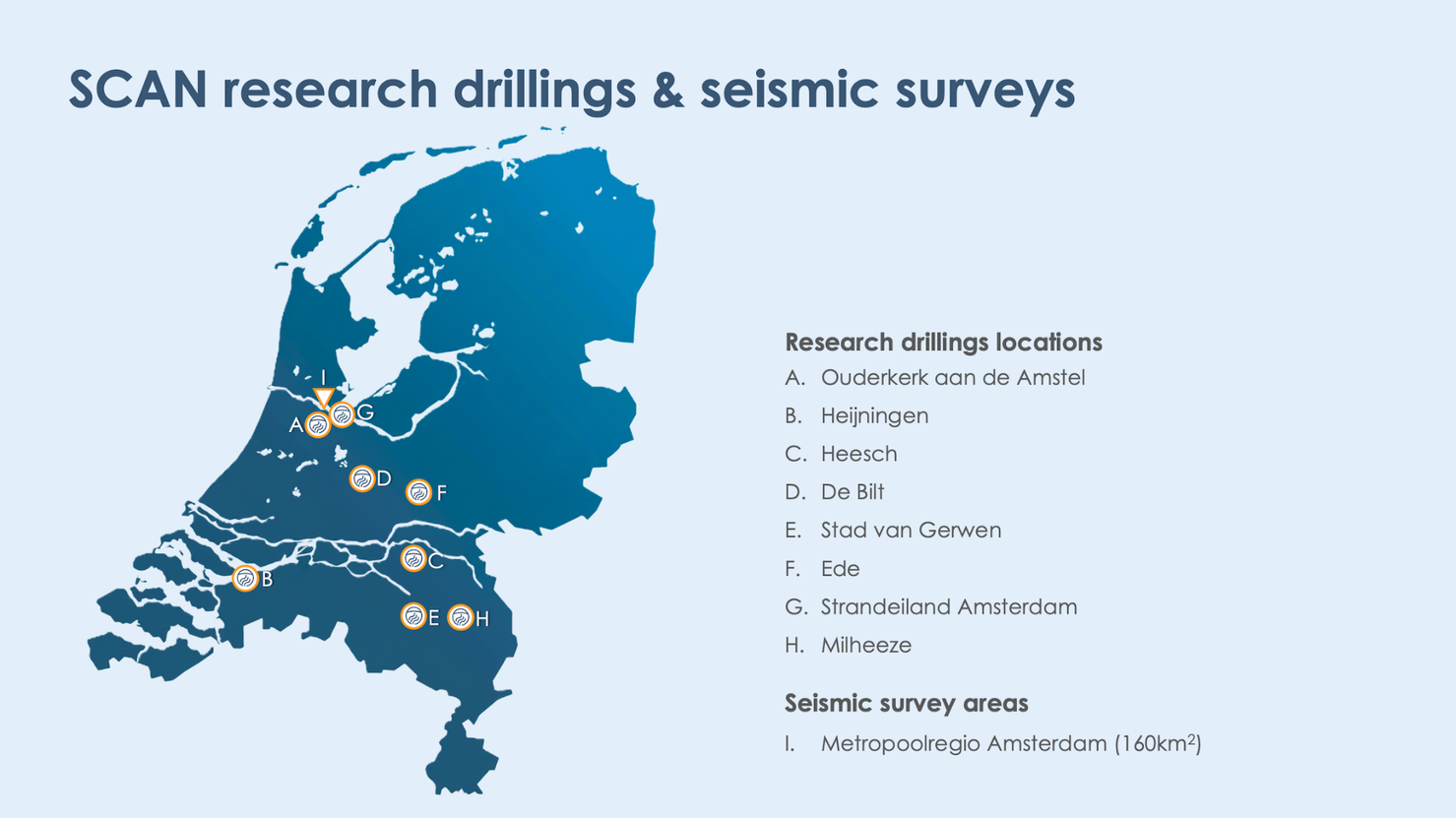 Overview of SCAN research activities that help improve knowledge of the Dutch subsurface and support the development of geothermal energy projects.
Why Conduct a Research Drilling Project?
The purpose of a research drilling project is to collect data. These data provide an important complement to the knowledge gained through seismic surveys.
Seismic surveys offer valuable insights into the presence and depth of geological formations that may be suitable for geothermal energy production. However, a research drilling project is required to assess properties such as permeability, temperature and water composition. A drilling project also serves as an important calibration point for the interpretation of seismic data. It allows experts to verify whether a geological formation indeed belongs to the expected rock group and to refine subsurface models accordingly. As part of the SCAN Geothermal Energy programme, eight research drilling projects were carried out between 2023 and 2025.
What Does a Research Drilling Project Look Like?
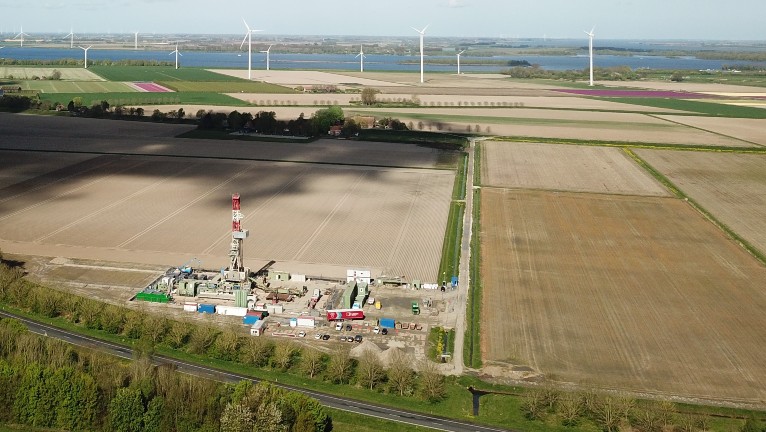
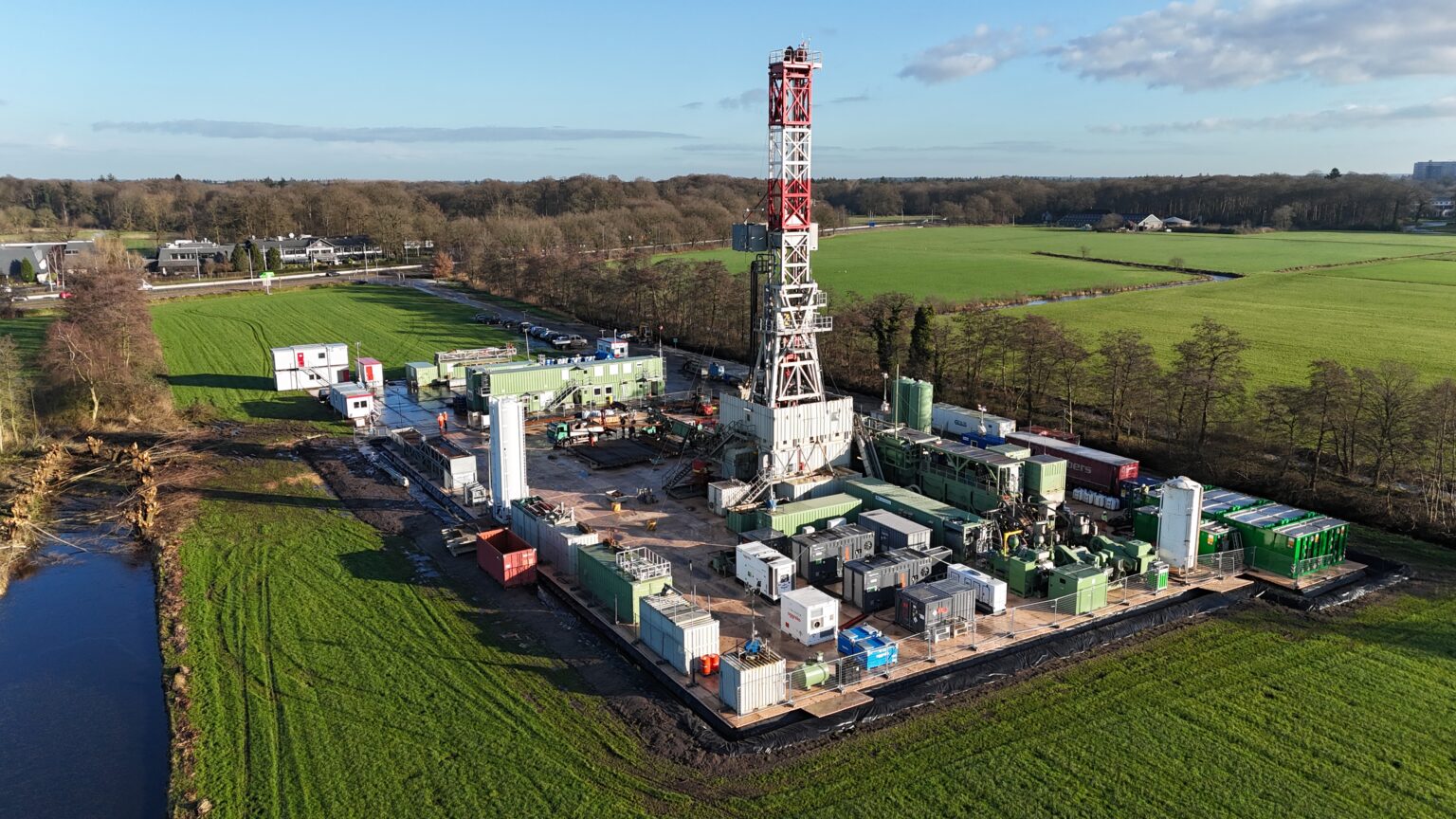
For a research drilling project, a site is prepared on which a drilling rig approximately 41 metres high is installed. A borehole is then drilled to a depth of up to 2 kilometres. The borehole has a diameter of around 40 to 60 centimetres at the surface, narrowing to approximately 15 centimetres at its deepest point.
Researchers subsequently investigate the thickness and properties of the geological formations encountered, as well as the temperature of the water contained within them. The entire process, including site construction and demobilisation, takes approximately six months, depending on the depth of the investigation. Once the research has been completed, the borehole is sealed and the site is restored to its original condition.
What Happens to the Research Data?
The results of the SCAN research drilling projects are made publicly available through NLOG.nl. The knowledge gained through these investigations helps improve our understanding of the geothermal potential of different regions in the Netherlands and supports the transition to a more sustainable heat system. The research results can be used by municipalities, provinces and companies to assess and develop geothermal energy as a heat source. Further studies are required to determine the economic feasibility of future geothermal energy projects in specific regions.
For more information about research drilling projects, visit the SCAN Geothermal Energy website or learn more about the preceding seismic surveys.