

EBN invests over EUR 400 million in energy security and sustainability

Energie Beheer Nederland (EBN) is making substantial progress in further fulfilling its public role in the energy transition. Both when it comes to ensuring energy security and the decarbonisation of the energy system, the State Energy Company is forging ahead. The energy transition requires pace, ability to deliver and government leadership, and it is precisely on these fronts that EBN has taken concrete steps over the past year. This is stated in the 2025 annual report published today.
As the State Energy Company, EBN works to ensure energy security and accelerate the move towards sustainability. These two pursuits go hand in hand. EBN fulfils a high-profile role on both fronts through key transition projects and new initiatives, such as the Porthos- and Aramis CO2 storage projects, municipal and regional heat networks, and the sector agreement on gas extraction. In 2025, EBN’s investments in the energy transition topped EUR 400 million, significantly more than in previous years.
Security of energy and gas supply: new duties, bigger responsibility
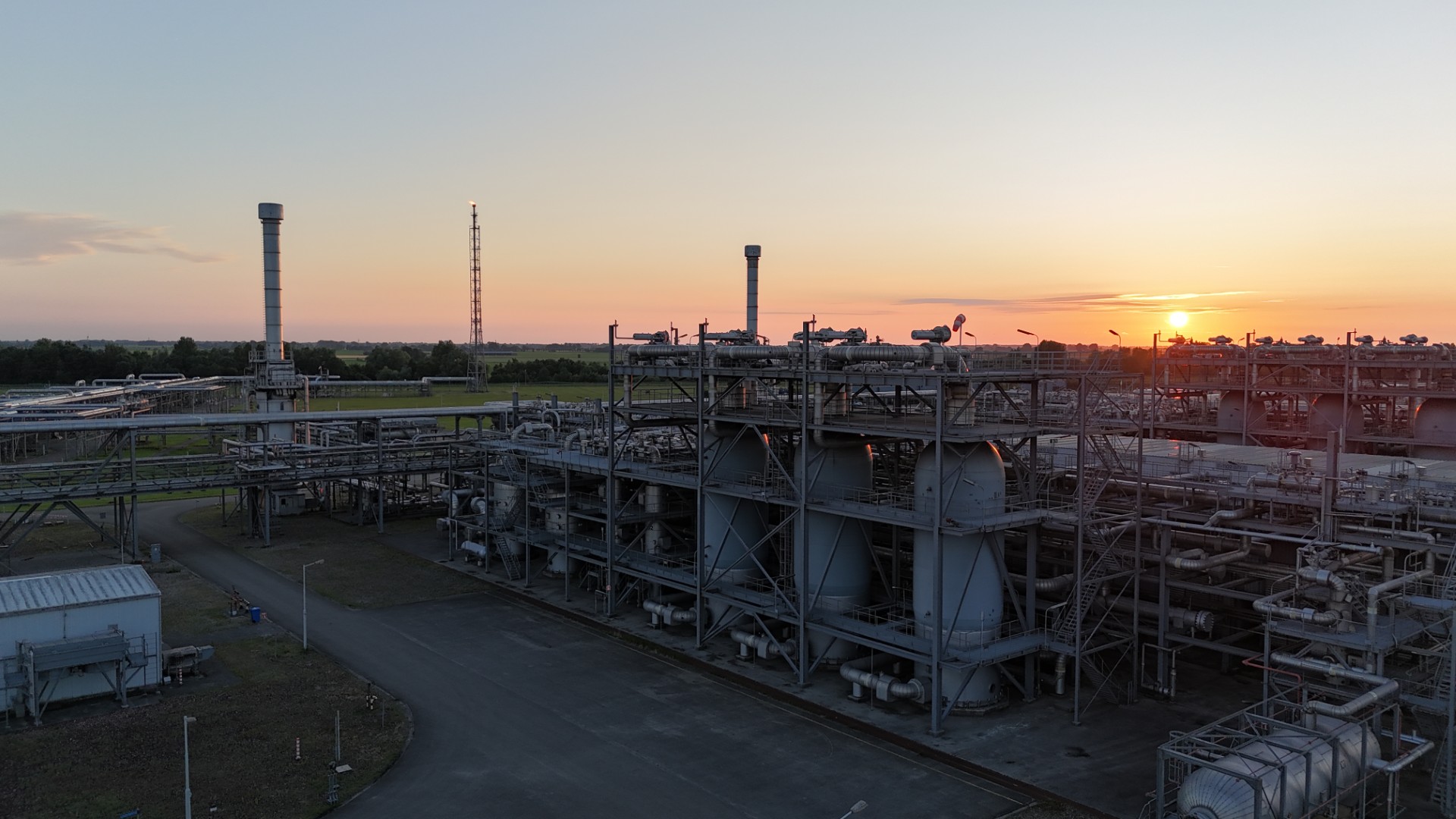
Energy security has never been more urgent. EBN plays a role in ensuring availability of natural gas, both on the production side and in filling gas storage facilities. While gas production from the ‘small’ gas fields has dropped to 2.9 Nm³ TQ (EBN share), we expect the Dutch government’s acceleration plan intended to boost extraction of Dutch natural gas to have a positive effect in the future. Together with the Ministry of Economic Affairs and the Element NL trade association, EBN will incentivise domestic gas extraction (especially in the North Sea) over the coming years to reduce dependence on gas imports.
In early 2025, EBN launched its own gas trading organisation to sell its ‘own’ gas, prompted by the fact that GasTerra will cease to operate as of the end of 2026. As of October 2025, EBN has been selling all of its own gas independently. At the same time, the government expanded EBN’s mandate as the national ‘filling agent’, which saw EBN inject 14.3 TWh of gas into the Bergermeer gas storage facility, 5.0 TWh into the PGI Alkmaar facility and an additional 7.4 TWh into the Norg and Grijpskerk facilities. EBN has been tasked by the Dutch government with filling gas storage facilities, and this role is now set to be expanded significantly in terms of volumes for 2026 and 2027.
CO2 storage: from design to actual implementation
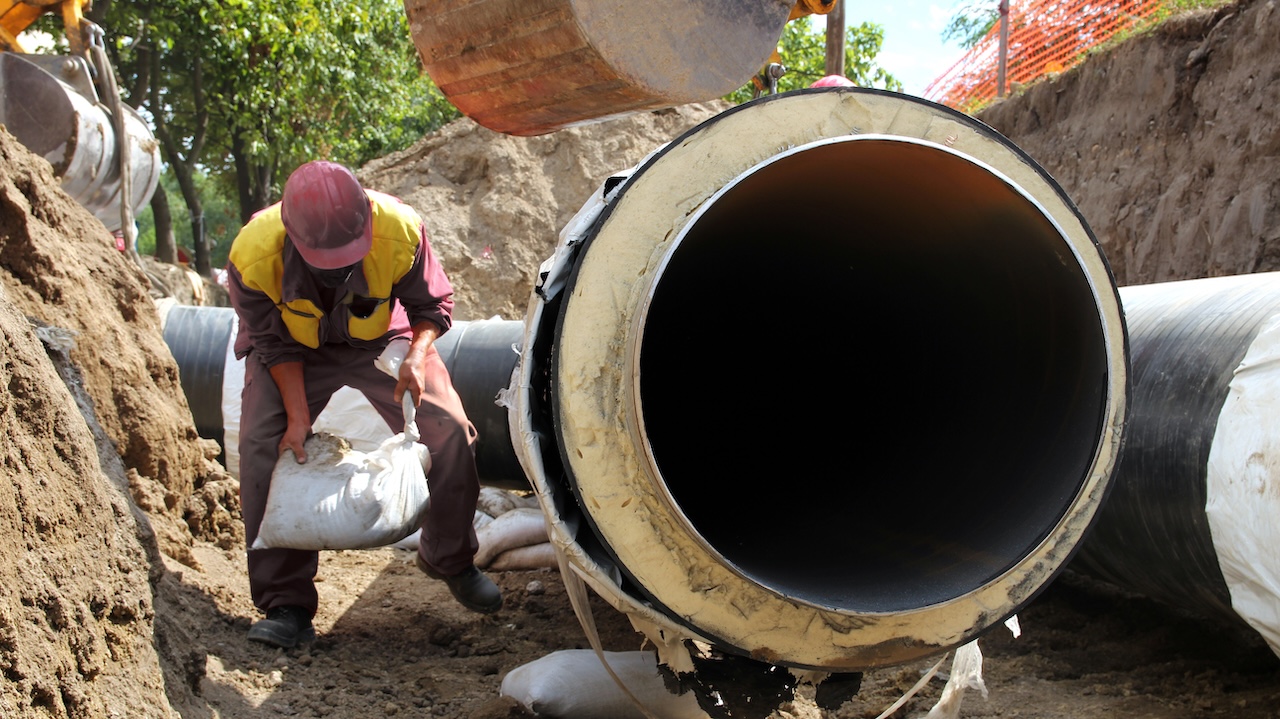
Porthos is Europe’s largest CO2 transport and storage project under development. In 2025, after years of preparation, the full 30-kilometre pipeline across Rotterdam’s port area was laid and the offshore pipeline was completed. Additionally, civil engineering work got underway on the compressor station, the cold water pumping station, the offshore platform and the wells. All of this brings us yet another step closer to the moment when the first CO2 can be stored in a (virtually) empty gas field below the North Sea bed.
Great progress was also made on the other, even larger CO2 transport and storage project, Aramis. EBN and Gasunie were given a stronger coordinating role in this project, which has meanwhile completed the design phase. TotalEnergies and Shell are still on board as strategic partners. The Dutch government has given Aramis a financial boost. Tenders for the construction of the 200-kilometre offshore pipeline have been invited, moving the project closer to its operational start in 2030. With this step, EBN formally becomes a co-developer on the project, which is a change that aligns well with the organisation’s expertise.
Positive developments in the heat value chain, from source to network
Following the government’s decision to formally designate EBN subsidiary NDW B.V. as the National Heat Investor and after years of preparation, EBN is now ready to start investing in heat companies and thus set the development of heat networks in motion. Given the strong need for coordination in the heat transition, EBN has been given a coordinating role across the entire value chain, from source to user.
A regionally focused geothermal energy approach was initiated in various regions, including West-Brabant, Amsterdam-Almere, The Hague and Rotterdam. These projects made tangible progress in 2025, with the Geothermie Delft (GTD) project delivering the ‘first heat’ in Delft. GTD supplies heat to the campus of Delft University of Technology and 6,000 homes. In 2025, EBN invested in a total of 13 geothermal energy projects, and this number is expected to grow considerably over the coming years.
Five test drillings were performed as part of the SCAN geological survey programme, which is crucial in building up a geothermal energy knowledge base. An extensive 3D seismic survey was performed in the Amsterdam metropolitan area, laying the foundation for future regional heat systems.
In addition to the above projects and developments, EBN continues to explore possibilities for hydrogen storage, mainly in empty gas fields, and has teamed up with various partners to prepare projects for the production of sustainable biomethane from biomass, such as the North Star project in Emmen.
Financial results
In 2025, EBN kept both its liquidity and solvency in excellent shape, thus maintaining a robust financial position. This is crucial for investments in the energy transition, like the over EUR 400 million invested in 2025. New activities that are being developed, such as CO2 transport and storage, geothermal energy, and heat networks, but also biomethane and hydrogen (storage), all require initial investments before they can start generating financial returns. In 2025, EBN posted a net loss of EUR 190 million, primarily due to falling revenue from oil and gas, higher damage and restoration costs in the province of Groningen and increased depreciation and impairment losses.