

Half-year report: EBN fully committed to the energy transition and energy security

Revenue for the first half of the year increases to EUR 1.6 billion, gas storage facilities filled further and important steps taken in CCS and heat
Utrecht, 27 August 2026 – In the first half of 2026, EBN took important steps to strengthen both the Dutch energy transition and energy security. The State Energy Company of the Netherlands generated revenue and other income of EUR 1.58 billion and a result of EUR 110 million. At the same time, EBN further expanded its role in filling the Dutch gas storage facilities, while new milestones were reached in the areas of gas production in the North Sea, CO₂ storage, geothermal energy and district heating.
The results demonstrate how EBN fulfils its public mandate: investing in a reliable, affordable and sustainable energy supply for the Netherlands. As a State Energy Company, EBN works on solutions that contribute to both the energy transition and energy security. The focus is not on individual projects, but on the coherence between reliability, affordability and sustainability, and on achieving the best possible balance between them.
Creating an integrated approach
According to Jaap Bierman, who took office as CEO of EBN in March, the energy transition requires an integrated approach: “The energy transition is entering a new phase. Geopolitics and implementation are becoming more complex, while investments are less likely to materialise on their own. At the same time, we are seeing market parties become more cautious. There is uncertainty about policy, prices, demand and returns, while major investments with longer payback periods are needed precisely now. State energy companies such as EBN can provide support where the market does not yet move on its own: by sharing risks, enabling investments and supporting new markets. The aim is not to replace the market, but to help it get moving until private parties are able to take on a greater role. In this way, we can shape the complex coherence within the Dutch energy system in the best possible way.”
Energy security for a reliable energy supply
Greater role in filling gas storage facilities
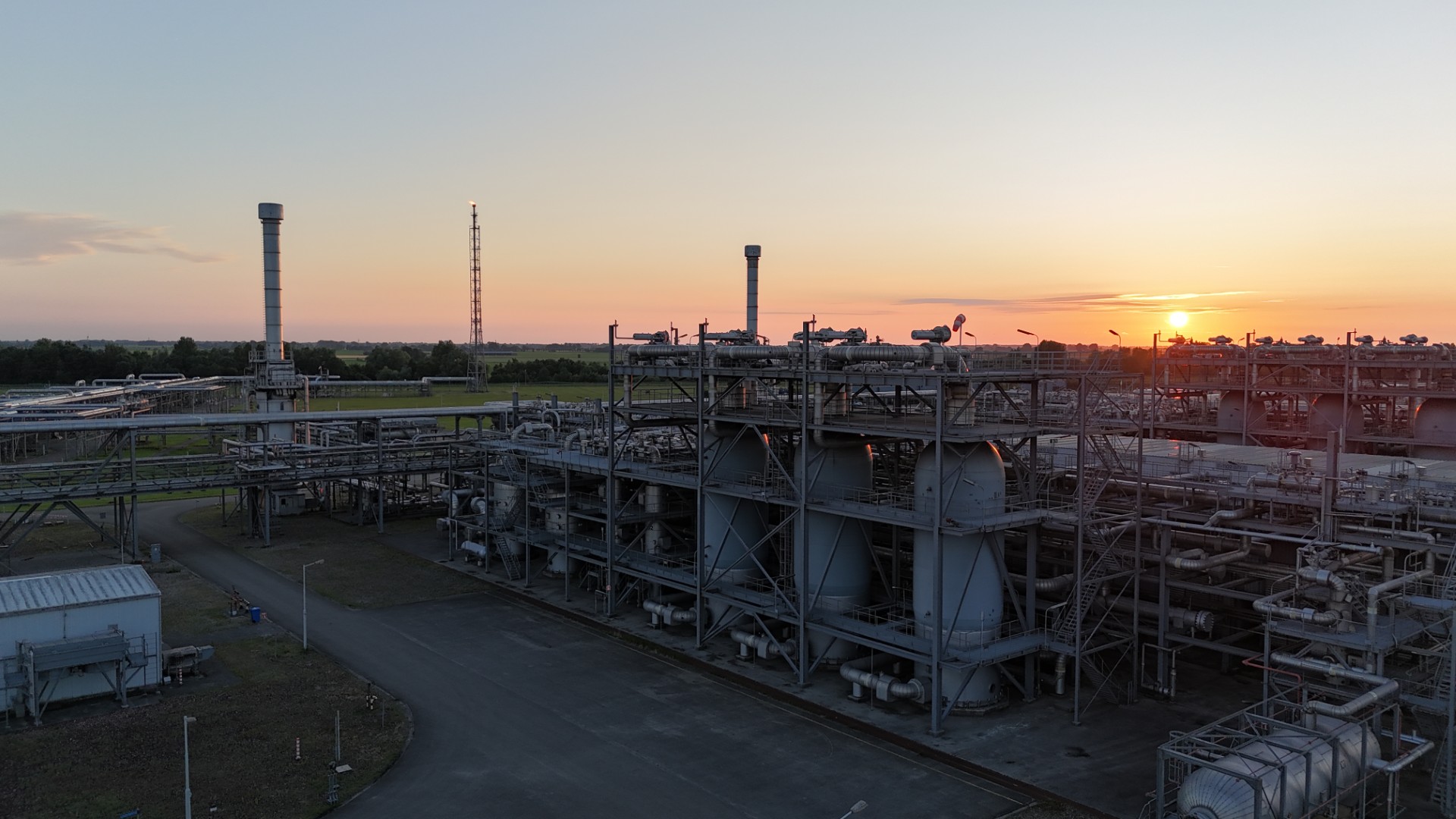
Since 2022, following the invasion of Ukraine, EBN has contributed to filling the Dutch gas storage facilities. EBN has once again been designated to support filling activities this year. The Ministry of Economic Affairs and Climate Policy has assigned the company a filling mandate for the storage facilities in Norg, Grijpskerk and Bergermeer, as well as for the Peak Gas Installation in Alkmaar. The Dutch gas storage facilities are currently more than 45% full.
Bierman: “The question of whether the gas storage facilities will be sufficiently full for the coming winter is a concern for many people. It is important to distinguish between the national filling target and EBN’s specific filling mandate. Under normal circumstances, market parties fill a large proportion of the storage facilities. These parties are currently reluctant to do so because of the geopolitical situation and the resulting high gas prices. EBN has therefore been instructed by the Ministry to fill up to 80 TWh, as well as 5 TWh for PGI Alkmaar. EBN is on schedule in carrying out this filling mandate. EBN has been awarded a maximum subsidy of EUR 1 billion for this purpose.
At the same time, given the geopolitical reality, it is clearly very important to have a fundamental discussion about how the Netherlands develops and implements policy on strategic energy reserves and gas stocks. This also applies to the security of our gas imports, which cover approximately three-quarters of Dutch gas consumption. We are currently holding these discussions with the Ministry of Economic Affairs and Climate Policy.”
The expansion of this public mandate is reflected in the company’s balance sheet. Gas inventories increased to EUR 1.3 billion and are largely financed through a credit facility provided by the shareholder.
Important progress in CO₂ storage
CCS is indispensable to achieving the climate targets and decarbonising industry. In close cooperation with public and private partners, EBN is taking important steps in developing the Dutch CO₂ storage value chain. An important milestone was reached in the Porthos project with the progress made on the compressor station. We aim to bring the project into operation in the second half of 2027.
For the Aramis project, which is intended to have a transport capacity of 22 million tonnes of CO₂ per year, work is progressing towards a final investment decision in 2027. In addition, the K14-FA and L4 storage sites received their storage permits during the first half of the year.
Development of the integrated heat value chain
Growth in geothermal energy and district heating
Important steps were also taken in the heat transition. A cooperation agreement was signed in Alphen aan den Rijn, and the first geothermal heat was supplied in Delft. In addition, EBN subsidiary NDW was designated as the National Heat Investor, or Nationale Deelneming Warmte. Partnerships have now been launched for publicly owned heat companies in Amsterdam, North Brabant and the Leiden region, among other areas.
Bierman: “Heat plays a crucial role in making homes more sustainable and can, at the same time, help reduce pressure on the electricity grid. Investments in heat should therefore not be assessed solely at project level, but also on the basis of their contribution to the energy system as a whole.”
Solid financial foundation
During the first six months of 2026, EBN generated an operating result (EBIT) of EUR 125 million and a result of EUR 110 million. Revenue and other income increased to EUR 1.58 billion, partly as a result of carrying out the filling mandates for the gas storage facilities.
Public value at the centre
EBN considers it its responsibility to bring together public objectives, technical expertise and market-driven implementation. The market remains indispensable, but public parties can help establish new energy value chains where investments are substantial, risks are high or societal benefits are not directly reflected in a single business case.
Jaap Bierman: “The energy transition will not succeed through a single technology, a single project or a single organisation. It will succeed if we manage the interrelationships effectively and have the courage to make choices for the long term. EBN deploys knowledge, capital and implementation capacity to make this possible.”