




The Dutch Subsurface
The Dutch subsurface extends several kilometres below ground and consists of multiple geological layers, the thickness of which varies across the country. Energy Beheer Nederland (EBN) has built extensive knowledge of the Dutch subsurface through decades of seismic surveys conducted for geothermal energy, natural gas and oil.
The composition of the deep subsurface varies from one location to another. This is the result of millions of years of sedimentation, during which different materials – including sand, clay and organic matter – were deposited. Movements within the deep subsurface have subsequently caused these geological layers to shift relative to one another.
These variations in the subsurface determine whether geothermal energy can be produced in a particular area. The same applies to the extraction of natural gas and other mineral resources such as oil and coal. The condition and characteristics of the subsurface also play an important role in determining whether it is suitable for the storage of energy and CO₂.

"*" indicates required fields
How do we know where different geological layers are located?
The composition of the Dutch subsurface has been studied for many decades. Since the 1950s, seismic surveys have been carried out across the Netherlands to map underground geological structures. By using sound waves, geoscientists can determine the composition and characteristics of the subsurface. The three most commonly used methods for generating these sound waves are explosive-source seismic surveys, vibroseis surveys and airgun seismic surveys. The most suitable technique is selected based on the local conditions and the objectives of the survey.
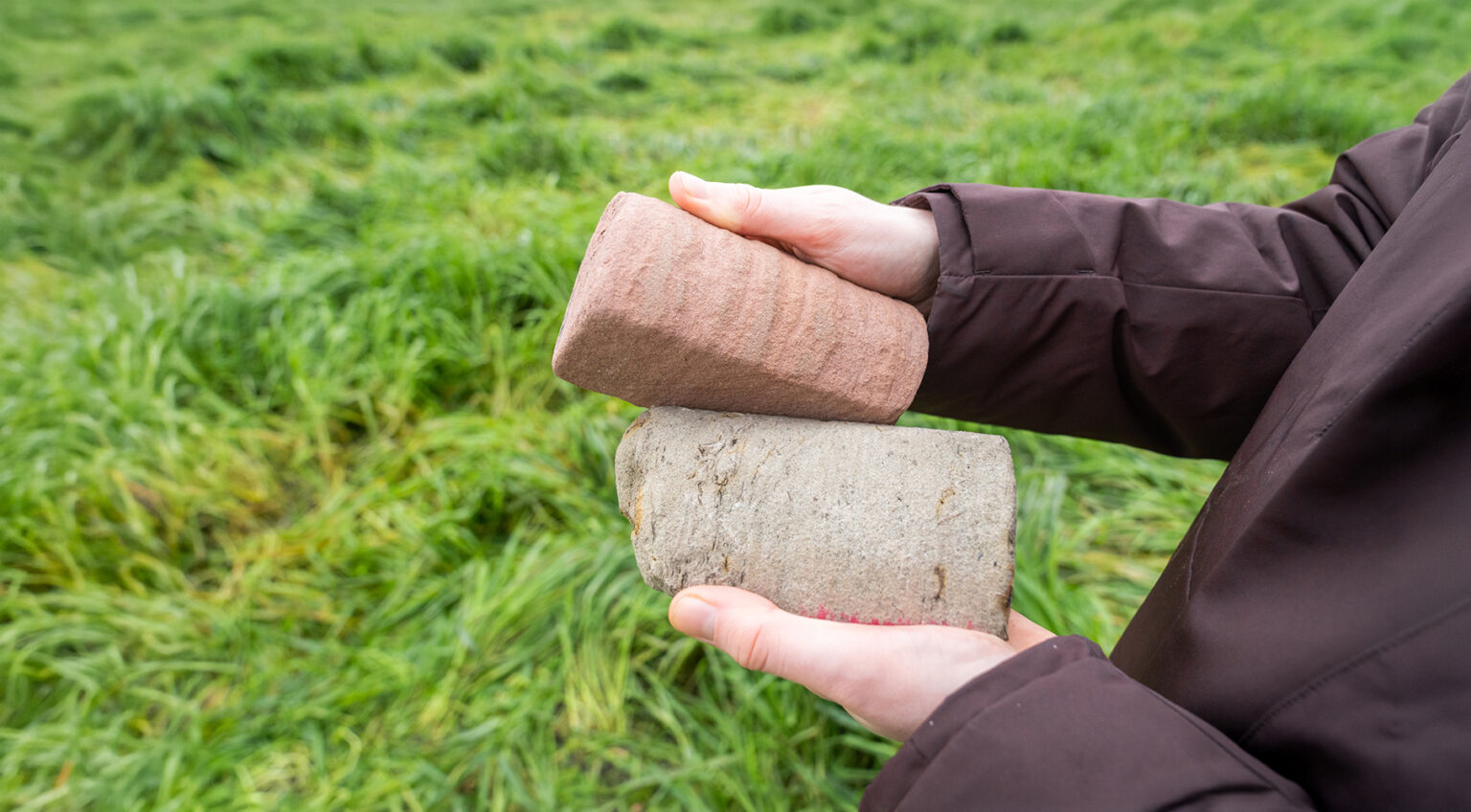
In addition to seismic surveys, exploratory drilling is also carried out. During these operations, boreholes are drilled hundreds of metres deep into the ground. By analysing the resulting core samples, experts can determine which geological formations are present, at what depth they occur, and whether they contain recoverable resources such as natural gas or geothermal energy.
Which geological layers make up the Dutch subsurface?
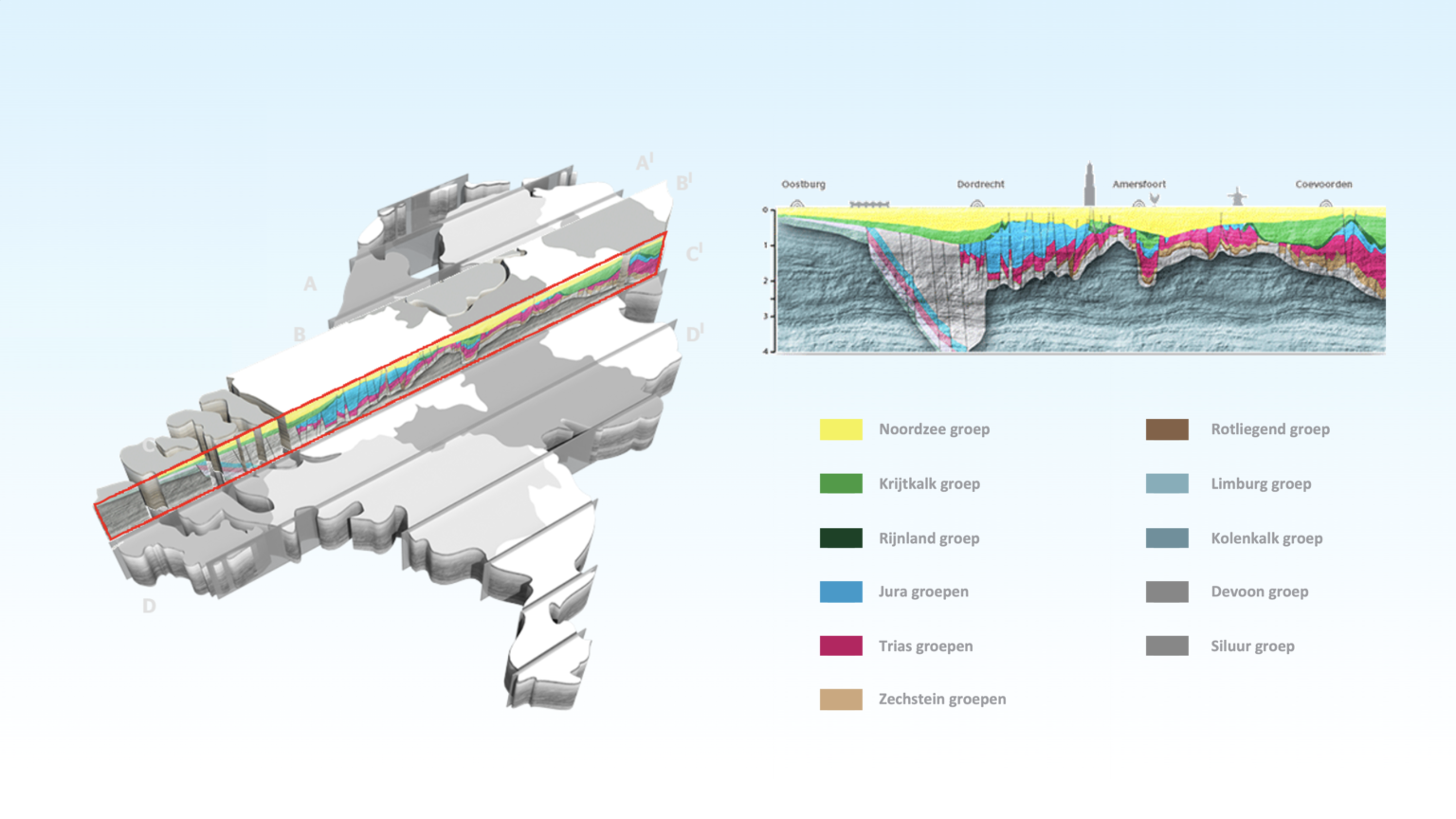
The Dutch subsurface consists of 11 geological groups. The North Sea Supergroup forms the uppermost part of the subsurface and was deposited over the past 65 million years. The oldest and deepest geological unit in the Dutch subsurface is the Silurian Group. Below is an overview of the geological groups, arranged from the youngest to the oldest.
Dutch Subsurface Geological Layers
This geological unit, locally up to 1,500 metres thick, consists of extensive layers of limestone and sandstone deposited in a shallow marine environment. The fine-grained limestone is composed largely of the skeletal remains of microscopic marine organisms. The limestone deposits found in South Limburg (sometimes incorrectly referred to as “marl”) belong to this group, which occurs throughout most of the Dutch subsurface.
The Rijnland Group consists of sandstone formations up to 1,400 metres thick that were deposited in rivers, coastal environments and deeper marine settings during a period of significant subsidence. Today, these formations form important reservoir rocks for oil and natural gas generated in deeper source rocks.
A clay sequence that is locally up to 1,800 metres thick contains the Posidonia Shale, a grey to black claystone deposited during the Early Jurassic. A lack of oxygen prevented the organic material in this rock from decomposing. As a result, the Posidonia Shale is often the principal source rock for oil and (shale) gas in the subsurface of France, the Netherlands and Lower Saxony. This formation is typically 30 to 50 metres thick and occurs at depths ranging from 900 to 3,500 metres. Overlying deposits consist of sands, clays, limestones and other sediments deposited in coastal, deltaic and fluvial environments.
The Triassic Groups comprise deposits found throughout the subsurface of Western and Central Europe north of the Alps. They consist of three distinct lithological units: Buntsandstein, Muschelkalk (limestone rich in fossil shells) and Keuper (shale or claystone). This threefold subdivision gave rise to the name Triassic. In the Netherlands, rock salt is extracted from Triassic deposits. Limestone quarried near Winterswijk is used as a raw material for fertiliser production.
The Zechstein Group consists of thick sequences of rock salt formed through the evaporation of seawater. In some locations, these deposits exceed 1,500 metres in thickness. This impermeable sequence acts as a seal rock for the underlying oil and gas reservoirs. Under pressure, the salt may deform plastically, creating salt structures and salt diapirs that can reach several kilometres in height.
The Rotliegend Group overlies volcanic deposits, including basalts and volcanic tuffs, that are locally up to 80 metres thick. The group itself is up to 700 metres thick and consists of aeolian and fluvial deposits, including sandstone and claystone. A large proportion of the Netherlands’ natural gas, generated from deeper coal-bearing formations, is trapped within these reservoir rocks.
This geological unit consists of thick coal-bearing sequences interbedded with river and swamp deposits of sand and clay. The coal deposits of South Limburg belong to this group. In a small area of South Limburg these rocks crop out at the surface, whereas elsewhere in the Netherlands they occur several kilometres below ground.
This unit consists of thick limestone successions interbedded with equally thick shale sequences. Where rich in organic matter, the shales of the Geverik Member may contain shale gas. Despite its name, this geological group does not contain coal seams.
Middle and Late Devonian deposits occur deep within the Dutch subsurface, generally at depths too great for economically viable resource extraction. Characteristic Devonian deposits include red sandstones and conglomerates derived from nearby mountain ranges. These are overlain by sands, clays and calcareous sediments deposited during subsequent marine transgressions.
The deepest known geological unit in the Dutch subsurface is the Silurian Group. Silurian deposits have been encountered several kilometres below ground in the southern Netherlands and beneath the North Sea. These formations are generally too deep for resource extraction. They typically consist of quartzitic rocks and contain few or no fossils.
The uppermost part of the subsurface consists of sedimentary deposits and rocks that were laid down over the past 65 million years along the margin of the North Sea Basin, a large subsiding sedimentary basin. The oldest deposits are several hundreds of metres thick and consist mainly of marine clay, sandy clay and marl. Above these are up to 1,000 metres of sand and clay deposited by rivers. In some areas, shallow natural gas accumulations are present, formed either through the decomposition of organic matter (marsh gas) or by gas migrating upward through faults from deeper formations.