




CO₂ transport and storage and the energy transition
The Netherlands is taking important steps towards a carbon-neutral future. The use of energy from solar, wind and other renewable sources is increasing, but it is not yet sufficient to meet the climate targets set to combat climate change. Capturing, transporting and storing CO2, preventing it from entering the atmosphere, is therefore an essential part of the solution. While CO2 storage does not play a direct role in the energy transition itself, it is an important complementary measure that helps the Netherlands achieve its climate goals.
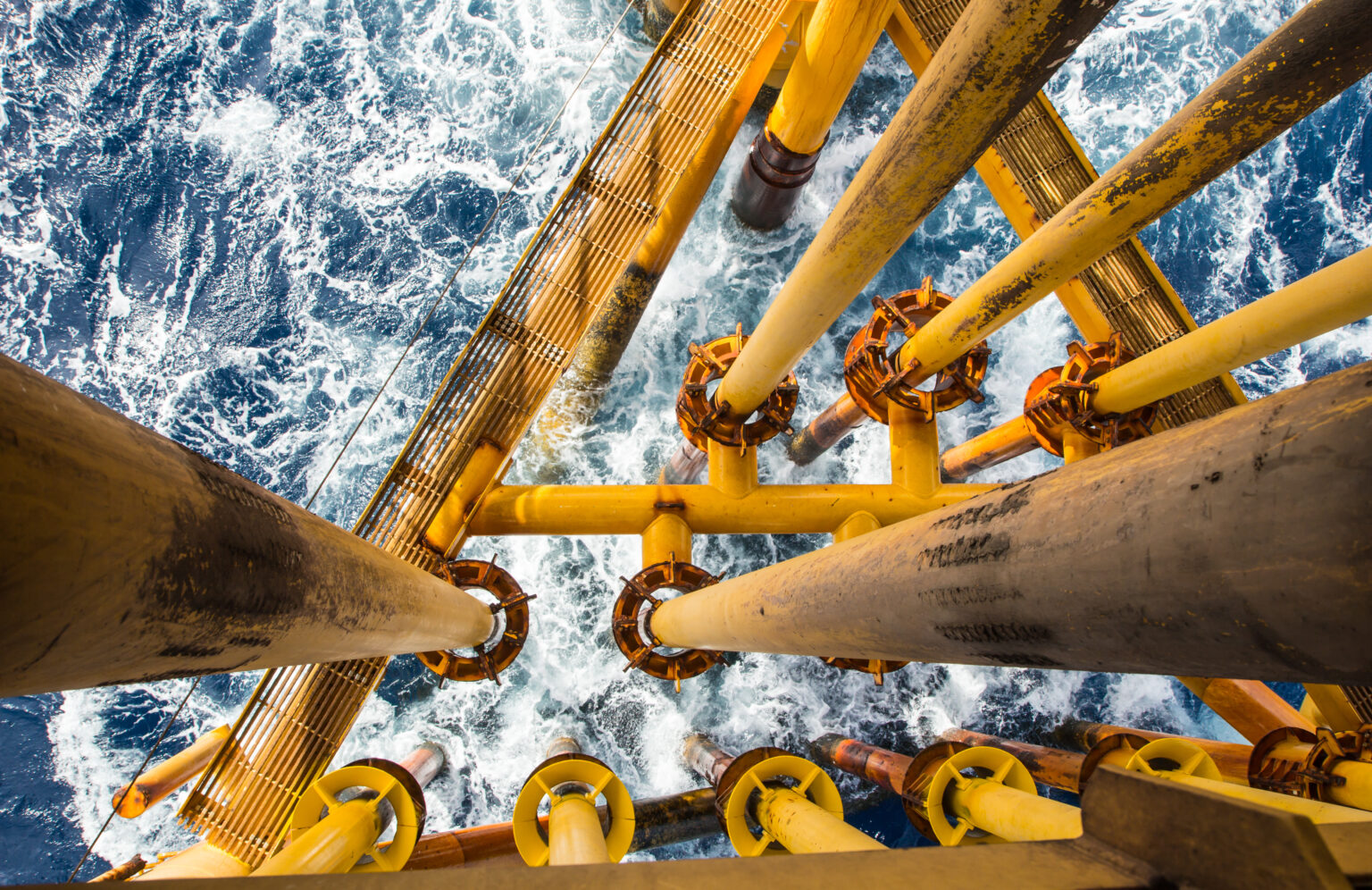
CO2 storage for achieving climate goals
There is broad scientific consensus worldwide that global warming must be limited to 1.5 degrees Celsius. Achieving this requires a drastic reduction in CO2 emissions. The European Union has set the ambitious target of reducing emissions by 55% in 2030 compared with 1990 levels. The Netherlands has adopted an even more ambitious goal, aiming for a 60% reduction.
By 2050, the Netherlands aims to be climate neutral. This means achieving net-zero CO2 emissions: any remaining emissions will need to be balanced by measures that remove or offset CO2. As a result, reducing emissions alone will not be enough. Additional solutions, including CO2 capture and storage, are essential to help achieve national and international climate goals.
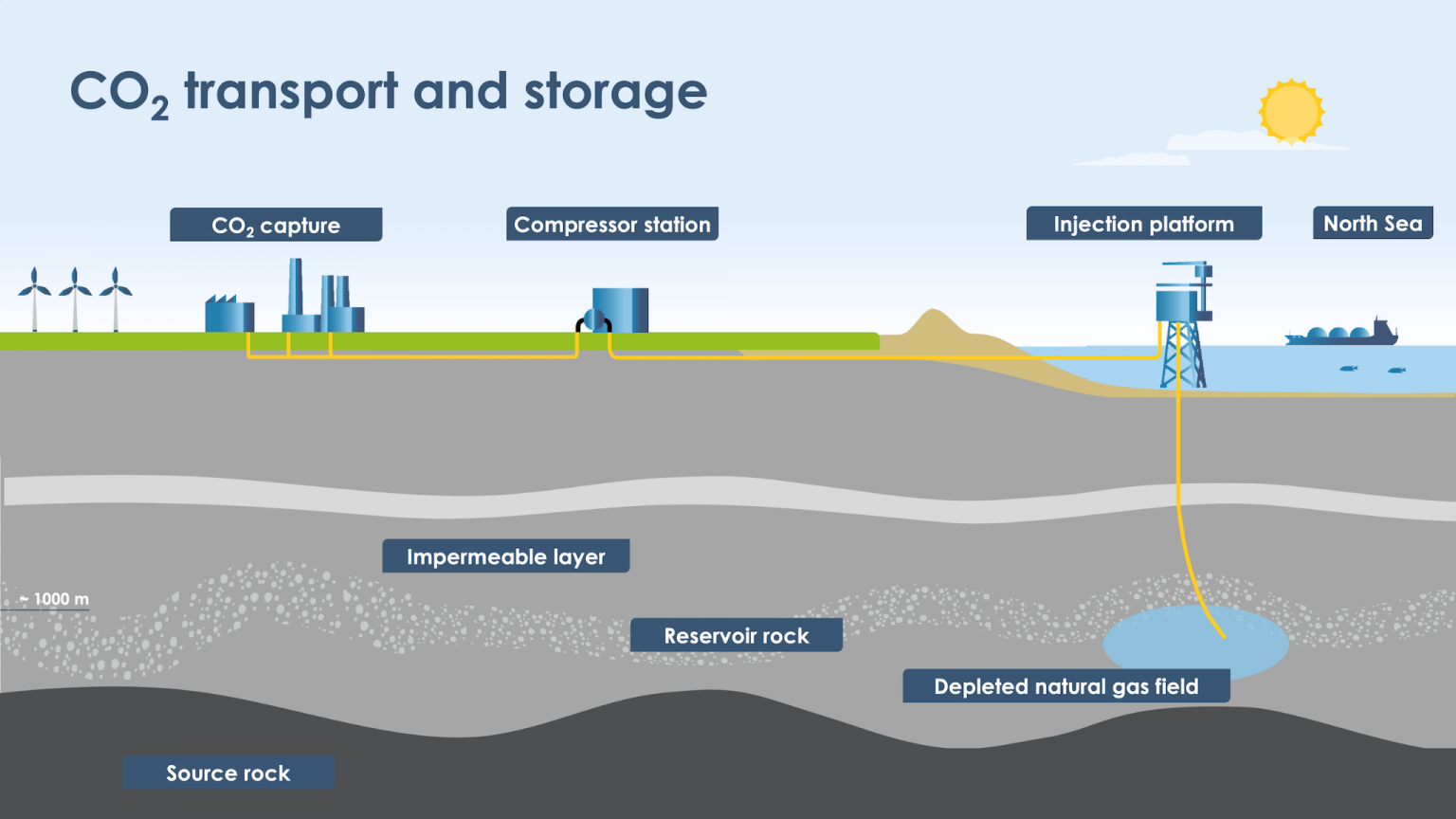 How CO₂ is captured, transported and permanently stored deep underground beneath the North Sea.
A combination of solutions
The energy transition requires a combination of solutions, such as the transition to renewable energy sources, energy conservation and the reuse of materials. Carbon Capture and Storage (CCS) is an important complementary measure in this transition, particularly for industry.
Several studies have shown that CCS is the fastest, most feasible and most cost-effective method for reducing CO2 emissions on a large scale. For example, the CO2 transport and storage projects Porthos and Aramis could reduce more than 61% of the current emissions from Dutch industry within the next decade.
Which industries is CCS intended for?
CCS is primarily intended for energy-intensive industries that will not be able to switch fully to sustainable production methods before 2030, partly because solutions such as sufficient supplies of green hydrogen will not be available in time. Examples include steel manufacturers, chemical companies, fertiliser producers and refineries. In these sectors, CCS delivers the necessary CO2 emissions reductions while giving companies time to transition to sustainable, future-proof operations.
The technology developed for CO2 capture and transport can also support the development of the blue hydrogen economy, serve as a stepping stone towards Carbon Capture and Utilisation (CCU), and potentially even enable the removal of CO2 already present in the atmosphere through Direct Air Capture.
What is EBN’s role?
EBN plays an active role in the development of CO2 transport and storage in the Netherlands. As a public organisation, we work closely with government and industry to help develop projects such as Porthos and Aramis, which enable CO2 to be transported and safely stored in depleted gas fields several kilometres beneath the North Sea. Through these projects, EBN contributes to the long-term reduction of CO2 emissions and supports the achievement of national and European climate goals.
Partner in CO2-transport and -storage
EBN is involved in key projects across the CO2 value chain, from transport infrastructure to offshore storage. We combine expertise in the subsurface with experience in project development, helping to connect different parts of the CCS chain and create the conditions needed to scale up CO2 storage safely and efficiently.
Knowledge development and sharing
In addition to its role in project development, EBN is committed to advancing and sharing knowledge. Knowledge sharing is essential for the successful and timely development of new technologies, markets, and infrastructure. That is why EBN develops, collects, and brings together knowledge for all parties involved in CO2 transport and storage.
One of the most important initiatives is the annual Carbon Storage Dialogues, a platform where stakeholders from across the CO₂ value chain come together to discuss the latest developments in technology, financing, project progress, policy, and technical expertise. During Carbon Storage Dialogues, EBN also presents the annual ‘CO2 in Figures’ infographic, which provides an up-to-date overview of key CO2 facts and figures at the Dutch, European, and global levels.
Through project participation, advisory activities, and knowledge sharing, EBN helps build the expertise, infrastructure, and partnerships needed to develop a safe, effective, and scalable CO2 transport and storage system.