




Benefits and challenges of CO₂ storage
CO2 capture and storage, also known as Carbon Capture and Storage (CCS), is an important tool on the path towards a climate-neutral Netherlands by 2050. By capturing CO2 from industrial processes and safely storing it beneath the seabed, CCS helps reduce greenhouse gas emissions and achieve climate goals. At the same time, expanding storage capacity, as agreed within the EU, presents a number of challenges.
CO2 storage: what is it and why is it important?
Carbon Capture and Storage (CCS) consists of three steps:
- Capture: CO2 is captured from industrial processes, such as steel or cement production, as well as from the production of blue hydrogen or electricity.
- Transport: the CO2 is transported via pipelines or ships.
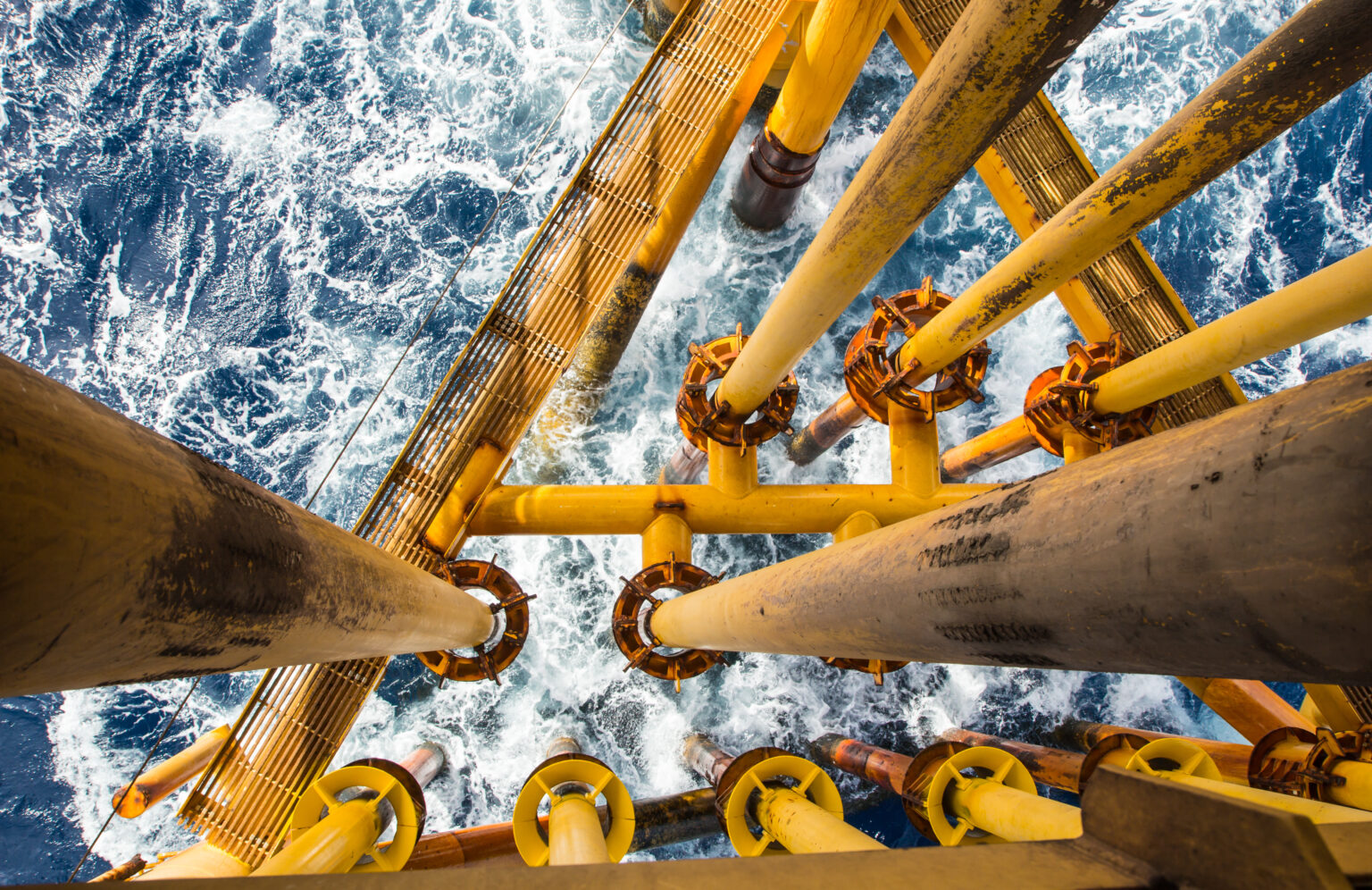
- Storage: the CO2 is injected and stored in depleted gas fields several kilometres beneath the North Sea.
CCS makes an important contribution to emissions reduction, particularly in sectors where CO2 emissions are difficult to avoid, such as heavy industry. In this way, CCS complements other climate measures, including energy efficiency and renewable energy generation.
`
Benefits of CO2 storage
The energy transition requires a combination of solutions, including the shift to renewable energy sources, energy efficiency measures, and the reuse of materials. Carbon Capture and Storage (CCS), involving the capture, transport, and storage of CO2, is an important complementary measure, particularly for energy-intensive industries that are unlikely to switch fully to sustainable production methods before 2030.
Various studies have shown that CCS is the fastest, most feasible, and most cost-effective way to achieve large-scale CO2 emissions reductions.
As much as possible, CO2 storage makes use of existing infrastructure, such as depleted gas fields located several kilometres beneath the North Sea. These depleted fields have safely contained natural gas for millions of years, making them well suited for the safe storage of CO2 as well.
The technology developed for the capture and transport of CO2 can serve as an enabler of the blue hydrogen economy, a stepping stone towards carbon reuse (Carbon Capture and Utilisation, CCU), and the removal of CO₂ already present in the atmosphere (Carbon Dioxide Removal, CDR). Read more about the different forms of industrial carbon management.
Challenges of CO2 storage
To make CCS a reality, an entirely new value chain must be established, including new business models, risk-sharing arrangements, regulatory frameworks, and financing mechanisms. Much of this ecosystem is still under development, creating uncertainty for both CO2 emitters and companies seeking to provide storage services. At the same time, early participation by these stakeholders is essential to gain greater insight into future storage capacity, infrastructure requirements, and costs.
This calls for strong public-private partnerships. Particularly during the early stages of market development, additional government support is needed, alongside a fair allocation of risks between public and private parties. A European framework that enables scale, regulatory alignment, and cross-border cooperation is also crucial to support the growth of an effective CCS market.
Carbon capture, transport, and storage together form a single value chain. Ultimately, a CO2 molecule makes one continuous journey from the facility where it is emitted (the emitter) to its final storage location. However, the CCS value chain is still largely organised as a collection of separate components managed by different parties.
The technology required for CCS is available and proven. The key challenge now is improving coordination and collaboration across the value chain. Stronger integration between emitters, transport providers, storage operators, and policymakers is essential to enable CCS to scale up effectively and deliver the emissions reductions needed to meet climate goals.
Like the Netherlands, the European Union has set the goal of becoming fully climate-neutral by 2050. Achieving these ambitions requires cooperation across Europe, including in the field of Carbon Capture and Storage (CCS).
Thanks to its location on the North Sea, the Netherlands is ideally positioned to transport and securely store CO2 from across North-Western Europe in depleted fields beneath the North Sea. To make this possible, the development of a broader CO2 transport network is essential. EBN is already working with its partners on cross-border infrastructure, including the development of a CO2 network connecting the Netherlands and Germany.
CO2 storage and climate goals
CCS is an essential technology for achieving climate goals and therefore an important complementary element of the energy transition, particularly for energy-intensive sectors that are not yet able to switch fully to sustainable production methods. At the same time, CCS requires further scaling up, collaboration and clear framework conditions. By investing now, CO2 storage can make a substantial contribution to a climate-neutral economy.
The role of EBN
As an adviser to the Ministry of Economic Affairs and Climate Policy, EBN plays an important role in the development of scalable CCS solutions and has a responsibility for the broader public interest. This means ensuring that new systems are safe, scalable and designed for the long term, while also safeguarding effective collaboration between public and private companies and supporting the further development of the value chain. In addition, EBN contributes to the development of transport infrastructure and ensures that the different parts of the CO2 transport and storage chain are well connected.